
8 Ways to Protect Your RCM from the $100B Medical Billing Fraud Crisis
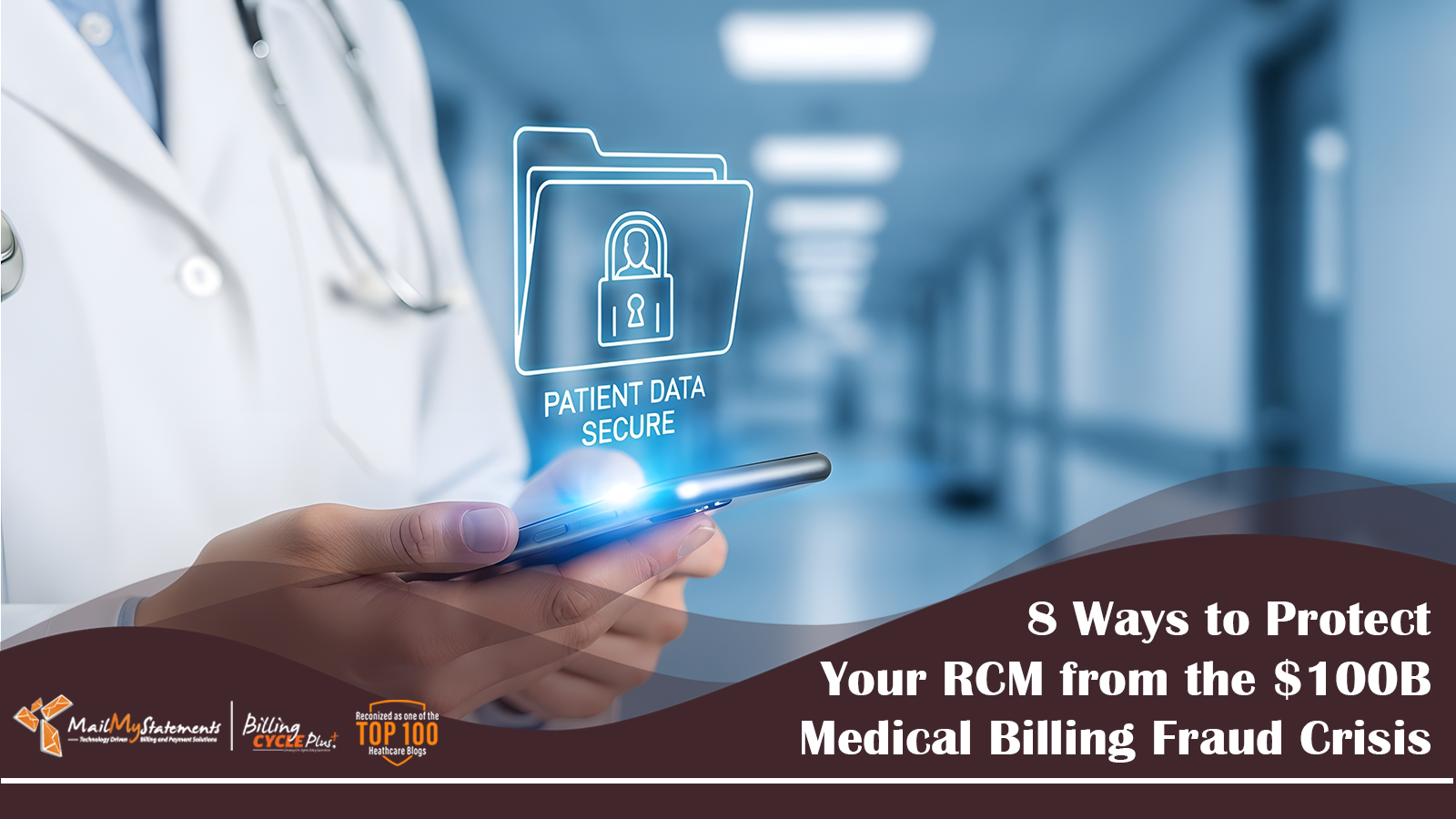
While digitizing patient collections streamlines the revenue cycle, it also creates new vulnerabilities and opportunities for medical billing fraud. Hackers and fraudsters know these systems are virtual goldmines containing social security numbers, medical histories, and payment details.
The consequences of a successful cyberattack are severe. The massive Change Healthcare ransomware attack recently compromised the data of roughly 192.7 million Americans, and the Department of Justice recovered a record $5.7 billion in healthcare false claims in 2025 alone.
The Cost of Vulnerability: The average healthcare data breach now costs an estimated $7.42 million per incident, and medical billing fraud drains up to $100 billion from the healthcare system annually.
Securing your Revenue Cycle Management (RCM) requires a multi-layered approach. Here are eight actionable measures to safeguard your organization against external cyber threats and internal fraud.
1. Implement Stringent Access Controls
Rethink who has access to your sensitive billing platforms. Adopt a “least privilege” approach, restricting system entry strictly to what an employee needs for their specific role. Enforce multi-factor authentication (MFA) across the board.
Pro-Tip: Upgrade to zero-knowledge authentication for all vendor portals. This ensures that even the service provider cannot access or read your plaintext passwords.
2. Encrypt Data and Maintain Offline Backups
Encryption scrambles your data so that even if cybercriminals bypass your perimeter, the stolen files remain unreadable. Ensure encryption is active for both data at rest (stored on servers) and data in transit (moving across networks).
Pro-Tip: Store at least one set of daily backups completely offline or in an immutable cloud vault so ransomware cannot encrypt your recovery files.
3. Demand HITRUST-Certified Partnerships
Your billing security is only as strong as your weakest third-party vendor. Basic HIPAA compliance is the legal minimum, not the gold standard. When selecting a billing or statement partner, require verifiable, rigorous security credentials.
Pro-Tip: Look for partners with long-standing security track records. For example, MailMyStatements has maintained a HITRUST certification for over 10 years, ensuring our PHI protection protocols consistently exceed industry requirements.
4. Train Staff to Recognize Modern Phishing
The majority of breaches start with human error. Cybercriminals use sophisticated phishing emails to trick staff into handing over login credentials or downloading malware. Annual training is no longer sufficient.
Pro-Tip: Run unannounced, monthly phishing simulations based on current, real-world lures (like fake IT support tickets or urgent HR updates) to keep your team vigilant.
5. Adopt a “Click-and-Mortar” Billing Strategy
Relying entirely on digital channels creates a single point of failure. A “Click-and-Mortar” approach balances secure digital options—like SMS patient statements—with traditional paper billing. This diversifies your communication methods, ensuring patients still receive statements even if a digital portal goes offline during a localized cyber event.
Pro-Tip: Use paper statements containing secure, personalized QR codes to bridge the physical and digital gap, safely guiding patients to an encrypted payment gateway without relying on easily spoofed email links.
6. Monitor for Upcoding and Billing Anomalies
Not all threats come from outside hackers. Internal fraud, such as upcoding (inflating billing codes) or phantom billing (charging for unrendered services), accounts for billions in false claims.
Pro-Tip: Deploy automated auditing software that flags duplicate claims, unusual coding patterns, or provider outliers before the claims are submitted to payers.
7. Conduct Regular Penetration Testing
Don’t wait for a bad actor to find the holes in your billing system. Hire ethical hackers to conduct regular penetration testing. These simulated cyberattacks expose weak spots in your network, APIs, and web applications so your IT team can patch them.
Pro-Tip: Schedule full penetration tests bi-annually, but run automated vulnerability scans weekly to catch unpatched software vulnerabilities immediately.
8. Establish a Rapid Incident Response Plan
The speed of your response dictates the severity of the damage. An incident response plan outlines exactly what steps to take the moment a breach or ransomware attack is detected, from isolating infected servers to notifying regulatory bodies.
Pro-Tip: Print hard copies of your incident response plan and distribute them to key leaders. If ransomware locks down your network, digital copies of your recovery plan will be completely inaccessible.
Final Thoughts
Cybercriminals are aggressively targeting healthcare revenue cycles, but your organization doesn’t have to be a statistic. By combining rigorous access controls, encryption, and continuous monitoring, you can close the vulnerabilities in your billing systems.
At MailMyStatements, we believe that world-class security shouldn’t come at the expense of the patient experience. As one of the first third-party vendors to offer HITRUST-certified patient billing, we provide a validated framework that consistently exceeds HIPAA standards and safeguards sensitive data.
Get in touch with us today to learn how our BillingCycle Plus® software can modernize your revenue cycle. By offering secure digital tools like eStatements, encrypted SMS payment alerts, and machine-learning chatbots alongside traditional print options, we give your patients the choices they expect with the security your practice demands.

Related Posts
How Secure Is Your Medical Billing Vendor?
You trust your medical billing vendor to protect patient information and follow HIPAA requirements. But…
Navigating HIPAA Compliance in Healthcare Print and Mail Operations
Today’s healthcare decision-makers juggle revenue cycles, patient satisfaction, and regulatory compliance daily. Among these priorities,…
Is Your Medical Billing System Cyber Resilient?
The healthcare industry faces a growing threat as valuable patient data increasingly attracts cyberattacks. With…