
The Click-and-Mortar Approach: Balancing Digital Billing with Paper Statements
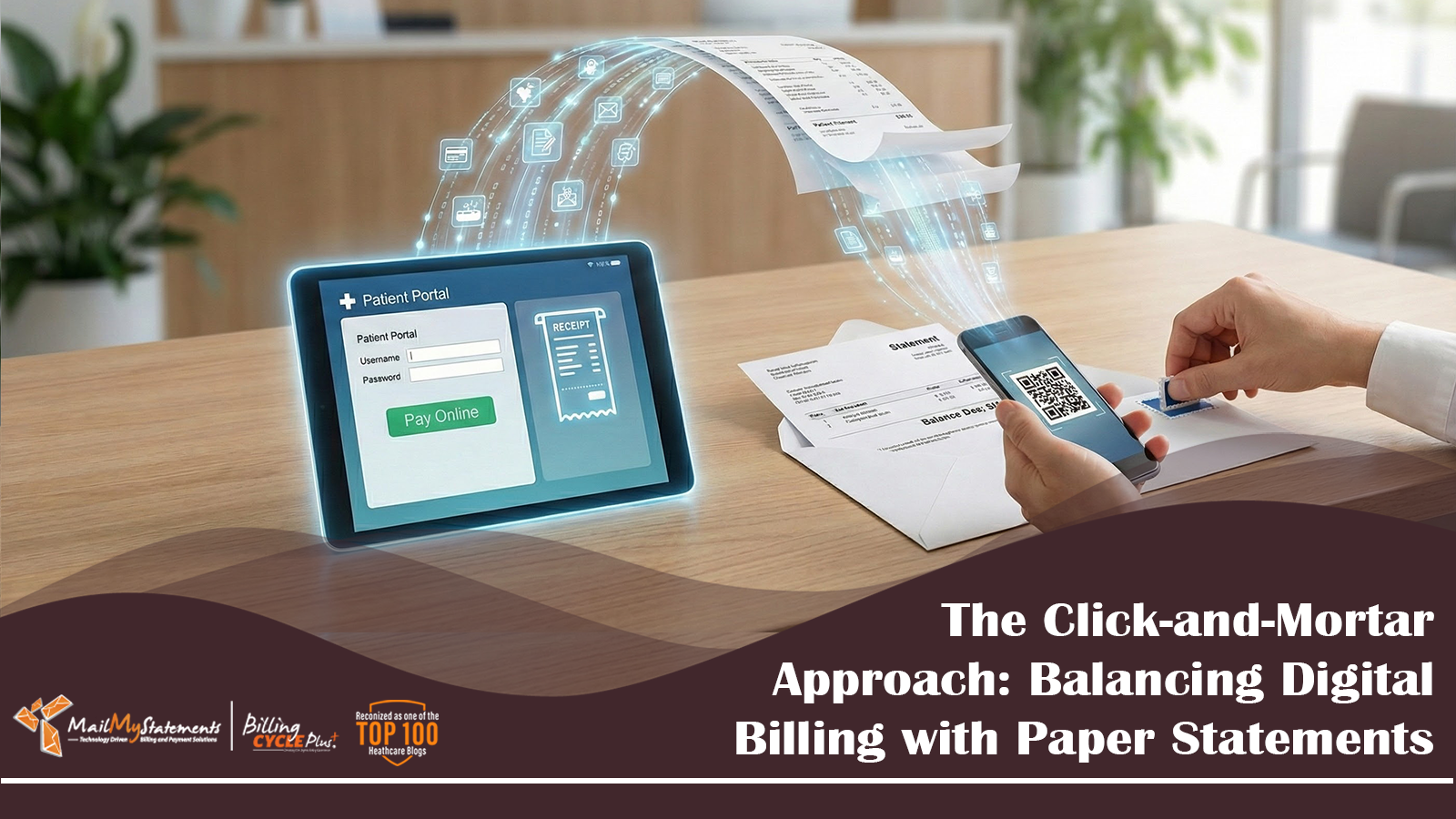
As more and more healthcare providers transition to patient portals and online billing, there’s an argument to be made for the continued use of paper statements.
Yes, print does still matter, especially as providers increasingly compete in terms of patient satisfaction and offering a superior experience that meets patients where they’re at. Often, this means sending print statements, particularly for older patients who aren’t digital natives. So, the best option isn’t a matter of either/or—it’s offering both digital and print and allowing patients to choose how they receive and pay their medical bills.
Let’s explore why omnichannel billing still plays a crucial role in optimizing revenue cycles and patient payments.
Patient Choice Is the New Standard
It may seem like comparing apples to oranges when examining the experience provided by credit card or cellular phone service statements with the experience of paying healthcare costs. However, these days, patients expect the same level of convenience from their healthcare providers as they do when paying their monthly phone bill.
That means giving patients a number of options for when and how they pay, along with how they receive statements and other communications. And a simple digital vs. paper choice isn’t sufficient—digital options should include email, text, and patient portals. Even with all of these options, though, some patients will prefer a paper statement in the mail, which feels more “official” and can instill trust.
According to a survey by Consumer Action, 74% of patients prefer their medical bills to arrive via mail. They say the ease of viewing and accessing bills influences their preference, as does the fact that paper bills serve as a visible reminder to make a payment.
Again, it’s important to meet patients where they’re at and account for their diverse backgrounds and comfort levels with technology. Many older individuals prefer and rely on printed communications. Likewise, millions of Americans still live in areas with limited broadband access, making digital-only payment options exclusionary. Catering to their preferences decreases misunderstandings, confusion, and missed payments.
Trust and Transparency Drive Patient Action
Even as digital adoption grows, many patients still prefer mailed paper statements because they provide more legitimacy and security, fostering trust, particularly among patients who are wary of being scammed or spammed by online fraudsters.
For patients who have a natural wariness of online payment methods, print bills are a must. Patients who feel confused or suspicious about a bill are less likely to pay it. Clear, well-designed paper statements help mitigate that confusion and drive timely action.
Paper Statements Support Critical Moments in the Revenue Cycle
As a healthcare provider, your revenue cycle is always top of mind. And the more payments are delayed or missed, the more disruption it causes to your revenue cycle, eating into margins that are already tight.
Even for patients who prefer digital communications, print statements can still be useful at certain points in the revenue cycle and in specific circumstances:
- Initial Statement Delivery: Patients who pay digitally may still prefer to receive their first bill in person at their doctor’s office or by mail. It offers a clear explanation of healthcare costs and serves as a physical reminder that payment is due.
- Delinquent Accounts: Paper bills also serve as more formal reminders when bills go unpaid, helping to reduce days in accounts receivable. They feel more “official” than a text or email.
- Multi-Party Households: In families where one person manages medical bills for others, or when an adult child is paying bills for aging parents, physical bills can help with coordinating payments.
In short, print fills in the gaps that digital channels sometimes leave open.
Print + Digital: Better Together
An omnichannel billing strategy doesn’t require you (or your patients) to choose between digital and print. The best approach is to combine the two for maximum reach and effectiveness, and MailMyStatements is designed for just that.
Patients may prefer to receive printed bills and reminders, but also want to make their payments online. MailMyStatements enables payment via multiple options, including SMS, interactive chat-to-pay, one-click online payments, and QR code payments. For patients who prefer to handle everything offline, we offer phone and mail payments. In addition, we offer payment plans and payment methods that include eChecks, ACH, credit cards, Apple Pay, and Google Pay. It’s the flexibility that today’s consumers expect.
Deploying an omnichannel strategy benefits providers and consumers. Here are some key benefits:
- Faster Payments: Patients who receive multiple reminders across channels are more likely to pay sooner.
- Improved Satisfaction: Giving patients options reinforces the idea that your practice or hospital values their time and preferences.
- Lower Call Volume: When bills are clear and accessible, patients are less likely to call with questions, freeing up your staff.
- Reduced Bad Debt: Reaching patients through their preferred method increases your chances of getting paid.
According to a recent Trends in Healthcare Payments report, 49% of consumers are likely to switch providers for a better payment experience. Practices that deploy an omnichannel payment strategy with clear communications can capitalize on this opportunity.
Practical Steps for Providers and Billing Teams
Here’s how you can optimize your billing processes for increased payment satisfaction by leveraging a combination of print and digital billing.
- Understand your patients’ preferences by asking about billing and communication options during intake or through periodic surveys.
- Give patients the choice to switch between digital and print anytime.
- Ensure printed bills, emails, texts, and portal messaging all reinforce one another and are branded consistently. This also helps foster trust in your digital communications.
- Analyze which channels lead to faster payments and require less “housekeeping” work from your billing staff.
- Make sure bills are easy to read, transparent about costs, and include clear instructions on how to pay.
Choice Isn’t Optional, It’s Essential
It’s a misconception to believe that all patients want the ability to make payments digitally. What all patients want is choice and flexibility in how they receive communications and make their payments. A one-size-fits-all approach is bound to cause frustration and delayed payments.
Digital billing options are an essential part of your toolkit, but print communications are still an important component of a patient-centered billing strategy. That’s why we encourage our providers to offer an omnichannel approach built around your patients’ individual preferences.
Schedule a demo today to learn more about how MailMyStatements can meet your patients’ expectations through both print and digital communications.

Related Posts

Hidden Costs in Your Billing Process (And How to Eliminate Them)
While billing appears as a straightforward loop—deliver, invoice, collect—hidden inefficiencies often sabotage the process. Quiet…

5 Strategies to Improve Patient Self-Pay Collections
Healthcare finance leaders today face a growing challenge: collecting self-pay balances without eroding patient trust.…

Adapting to Value-Based Care Models: Implications for Patient Billing
The transition to value-based care marks a fundamental shift for patients, insurers, and healthcare providers…